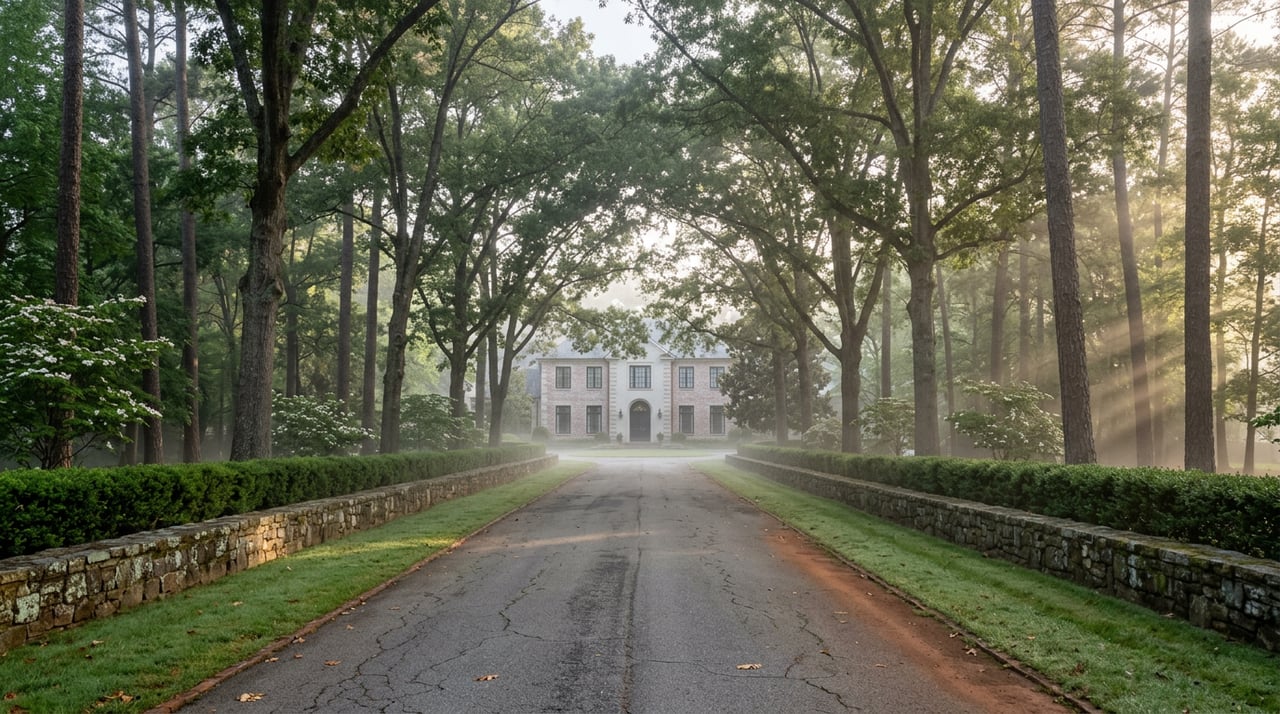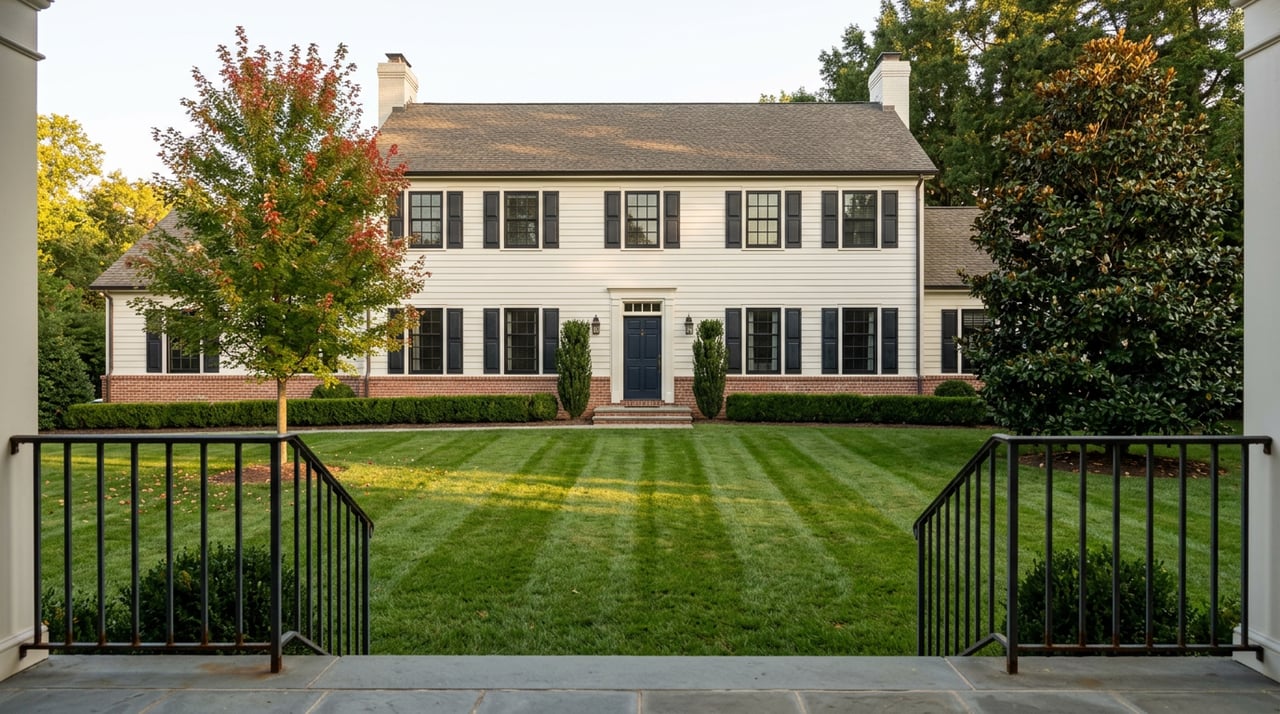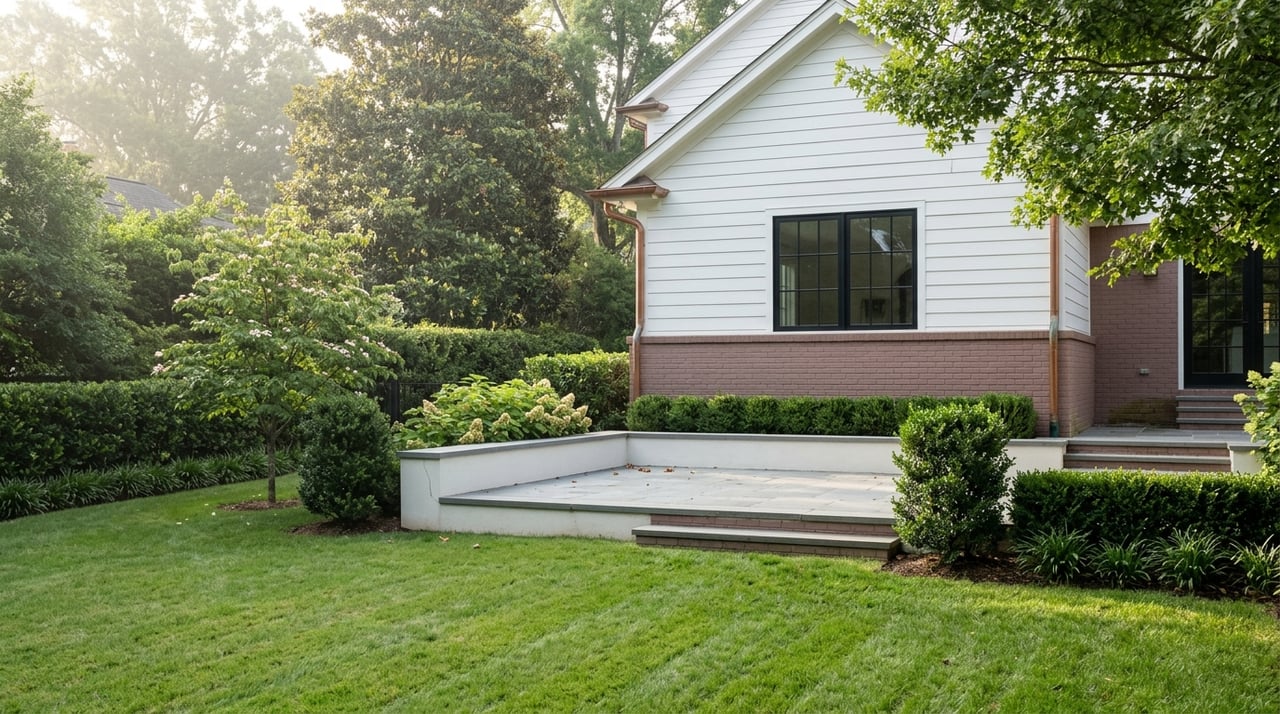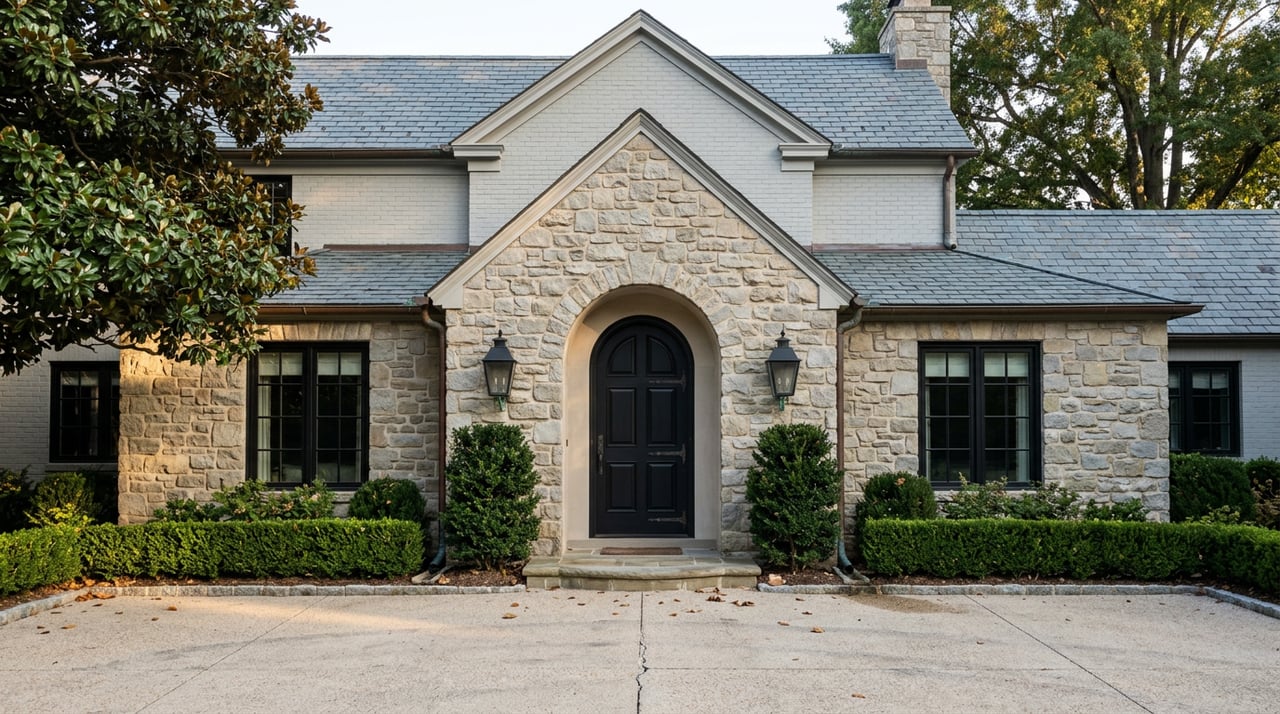
If you pulled the headline number on Hills of Rosemont this year, you'd walk away thinking the neighborhood is on fire. The median sale price for homes in the gated Durham community climbed 14.8 percent year over year through June 2026, landing at $4,879,000. That is the kind of number that makes a seller reach for a bigger listing price and makes a buyer feel like they missed the window.
Sit with the second number for a minute, though. The same homes that sold for that much more money took, on average, 44 days to sell in June 2026, up from just 10 days the year before. A neighborhood that used to move in a week and a half now takes over six weeks. Prices went up. Speed went down. Both are true at the same time, and neither one tells you what's actually happening unless you look at them together.
A Neighborhood of Sixty-Five Driveways
The reason both numbers can be true is that Hills of Rosemont isn't really a market in the way a subdivision with 400 homes is a market. It's 65 home sites spread across more than 400 acres, bordered on three sides by protected land and on the fourth by Old Chatham Golf Club. That geography means the neighborhood will never see meaningful new construction competing for buyer attention. It also means the pool of homes that could sell in any given month is small enough that a single estate-level transaction can move the median more than any actual shift in demand.
Access runs through three gated, access-controlled entrances rather than one, and the homes themselves sit on parcels ranging from roughly 4 to 8.5 acres, many with private lake frontage or wooded buffers that make each property genuinely distinct. Recent listings in the neighborhood have included a 12.5-acre estate designed by Summer House Architects and built by Bost Homes, with Vermont slate, Sonos whole-house audio, and dual generators, alongside a separate lakefront property known locally as Rosemont Hall, sited on more than six deeded acres. Homes like this do not have close comparables three doors down. When one of them sells, the median doesn't nudge. It jumps.
What the Small Numbers Are Actually Telling You
Only three homes were listed for sale in the neighborhood in June 2026, up from just one the year before. That is the entire active inventory for a 400-acre luxury community. Here's what that thin a market does to the statistics people use to make decisions:
| Metric | June 2025 | June 2026 |
|---|---|---|
| Median sale price | $4,250,000 | $4,879,000 |
| Average days on market | 10 | 44 |
| Homes listed for sale | 1 | 3 |
A median built from two or three transactions isn't a trend line. It's whatever those two or three sellers happened to be asking, and whatever those two or three buyers happened to be willing to pay for a specific piece of land with a specific house on it. The days-on-market number is arguably the more honest signal here, because it measures something that happens to every listing regardless of its size or finish level: how long it sat before someone made an offer the seller would accept. And that number nearly quadrupled.
The Pattern This Fits Into
This isn't an isolated Rosemont story. The NC Realtors statewide housing report for August 2026 shows total active listings across North Carolina holding roughly flat year over year, up 1.3 percent, while closed sales fell 13.1 percent over the same period. Overall inventory sits at 5.81 months of supply, which is generally read as a balanced market. But that statewide average hides a split by price tier. Homes priced under $375,000 remain in tight supply. Homes priced above $875,000, the tier Hills of Rosemont sits comfortably above, have inventory stretching out to 13.1 months.
That is the real story behind the Rosemont numbers. It isn't that buyers stopped wanting $4 million homes near Old Chatham Golf Club. It's that at the very top of the market, homes are sitting longer everywhere in North Carolina right now, and a thin neighborhood like this one shows that pattern in an exaggerated way because there's no volume to smooth it out.
What This Means If You're Buying
A rising median in a neighborhood like this should not be read as a sign that you've lost your negotiating position. If anything, the days-on-market number suggests the opposite.
- A 44-day average, up from 10, means sellers at this price point are no longer fielding offers within days of listing. There is room to negotiate on price, timeline, and contingencies that didn't exist a year ago.
- The expanding statewide inventory in the $875,000-plus tier means this isn't a Rosemont-specific squeeze. Comparable estate properties in nearby gated communities are facing the same slower pace, which gives you more to compare against when you're deciding what a property is actually worth.
- Because the neighborhood has so few active listings at any given time, waiting for "the right one" can mean waiting months. If you find a property that fits, the leverage is more likely to be in your favor on price than it was a year ago, even though the median suggests otherwise.
What This Means If You're Selling
If you own in Hills of Rosemont and you've watched that 14.8 percent median gain, the instinct is to price toward it. That instinct deserves a second look.
The properties that drove that median up were not typical listings. They were architecturally distinct estates with features, acreage, or lake frontage that don't have a direct comparable elsewhere in the neighborhood. If your home doesn't share those specific traits, pricing off the neighborhood median risks putting you in the group of homes now taking 44 days or longer to move, rather than the exceptional sales that pulled the average upward.
The more useful exercise is to ask what a buyer shopping at this price point is actually comparing your home against. With inventory in the $875,000-plus tier expanding statewide, buyers now have more competing options within driving distance of the Triangle's other gated communities. A pricing and marketing strategy that accounts for that competition, rather than one built on last year's median, is more likely to produce a sale that matches the effort that went into the home.
A Few Questions Worth Asking Before You Act on the Headline Number
Does a rising median always mean rising demand? Not in a market this small. With only two or three home sales driving the statistic in any given period, the median reflects the specific properties that happened to sell, not a broad shift in buyer interest.
Why did days on market change so much more than price? Days on market is measured on every single listing, so it isn't distorted by a handful of high-value outliers the way a median can be. In a thin market, it's often the more reliable read on whether buyer urgency has actually changed.
Is this happening everywhere in the Triangle's luxury segment, or just here? The statewide expansion of inventory in the $875,000-plus tier suggests this pattern extends well beyond Hills of Rosemont, though the effect shows up most clearly in small, low-volume neighborhoods like this one.
Numbers like these are exactly why a neighborhood-level read matters more than a headline figure, especially at this price point. If you're weighing a purchase or a sale in Hills of Rosemont or elsewhere in the Triangle, the team at Karen Coe Realty Group can walk through what the current comparables actually support for your specific property. Request Your Home Valuation to start with numbers built around your home, not a neighborhood average built from two or three sales.